The monsoon and the Bay
Chennai · Hydrosphere and Atmosphere
- First arrow
- Hydrosphere (the Bay of Bengal) evaporates into atmosphere.
- Return arrow
- What does the air send back to the Bay, and to Chennai's streets, when the northeast monsoon arrives in November?
- Sign
- A warmer bay evaporates more; ask what more water vapor in the air does to the heat the bay feels next.
- Grow to
- Geosphere joins first: rain soaks into the ground, or runs off the built surface into the Adyar.
- Sources
-
- Note frame
-
- First arrow, written for you: Hydrosphere evaporates into atmosphere.
- Return arrow, your verb: Atmosphere ______ hydrosphere.
- Sign test, your words: I pushed ______ up, and it came back bigger / smaller, because ______. Sign: + / −
- Next sphere, your verb: Geosphere joins by ______.
Reservoirs at zero, June 2019
Chennai · Hydrosphere and Geosphere
- First arrow
- Hydrosphere (Puzhal reservoir) seeps into geosphere (as groundwater).
- Return arrow
- When the reservoir is empty and every borewell is pumping, what does the ground send back to the city's water supply, and what happens when it cannot?
- Sign
- Pump more groundwater in a dry year and ask whether the emptier ground refills faster, or dries the land further.
- Grow to
- Atmosphere joins first: a failed northeast monsoon rains less onto the reservoir.
- Sources
-
- Note frame
-
- First arrow, written for you: Hydrosphere seeps into geosphere.
- Return arrow, your verb: Geosphere ______ hydrosphere.
- Sign test, your words: I pushed ______ up, and it came back bigger / smaller, because ______. Sign: + / −
- Next sphere, your verb: Atmosphere joins by ______.
Pallikaranai marsh as a sponge
Chennai · Biosphere and Hydrosphere
- First arrow
- Biosphere (marsh plants and their soil) soaks up hydrosphere (floodwater).
- Return arrow
- What does the stored water send back to the marsh's plants and birds in the dry months?
- Sign
- Fill in more of the marsh with buildings and ask whether the next flood is absorbed more, or less.
- Grow to
- Geosphere joins first: the marsh recharges groundwater in the rock below it.
- Sources
-
- Note frame
-
- First arrow, written for you: Biosphere soaks up hydrosphere.
- Return arrow, your verb: Hydrosphere ______ biosphere.
- Sign test, your words: I pushed ______ up, and it came back bigger / smaller, because ______. Sign: + / −
- Next sphere, your verb: Geosphere joins by ______.
Coral bleaching, Gulf of Mannar
Chennai · Hydrosphere and Biosphere
- First arrow
- Hydrosphere (warm sea water) warms biosphere (the coral).
- Return arrow
- What does a living reef send back to the water around it, and what stops when the coral bleaches?
- Sign
- Push the sea temperature up for a few weeks and ask whether the reef pushes back against that heat, or simply loses the algae that feed it.
- Grow to
- Atmosphere joins first: a warmer atmosphere heats the sea surface.
- Sources
-
- Note frame
-
- First arrow, written for you: Hydrosphere warms biosphere.
- Return arrow, your verb: Biosphere ______ hydrosphere.
- Sign test, your words: I pushed ______ up, and it came back bigger / smaller, because ______. Sign: + / −
- Next sphere, your verb: Atmosphere joins by ______.
Pichavaram mangroves and the shore
Chennai · Biosphere and Geosphere
- First arrow
- Biosphere (mangrove roots) traps geosphere (sediment).
- Return arrow
- What does the built-up mud send back to the mangroves that lets them spread?
- Sign
- More roots trap more mud; ask whether more mud grows more mangroves.
- Grow to
- Hydrosphere joins first: the roots slow the tidal water that carries the sediment in.
- Sources
-
- Note frame
-
- First arrow, written for you: Biosphere traps geosphere.
- Return arrow, your verb: Geosphere ______ biosphere.
- Sign test, your words: I pushed ______ up, and it came back bigger / smaller, because ______. Sign: + / −
- Next sphere, your verb: Hydrosphere joins by ______.
Chennai heat island
Chennai · Geosphere and Atmosphere
- First arrow
- Geosphere (built surfaces: roads, roofs, concrete) absorbs and re-radiates heat into atmosphere.
- Return arrow
- What does hotter air over the city send back down to the concrete at night?
- Sign
- Add more concrete and ask whether the air over the city gets hotter, and whether hotter air cools the concrete or keeps it warm.
- Grow to
- Biosphere joins first: trees shade the surfaces and breathe out water vapor that cools the air.
- Sources
-
- US EPA, What Are Heat Islands?Origin: The US Environmental Protection Agency, a government regulator, publishes this page to explain heat islands to communities planning how to cool their cities.
- Note frame
-
- First arrow, written for you: Geosphere absorbs and re-radiates heat into atmosphere.
- Return arrow, your verb: Atmosphere ______ geosphere.
- Sign test, your words: I pushed ______ up, and it came back bigger / smaller, because ______. Sign: + / −
- Next sphere, your verb: Biosphere joins by ______.
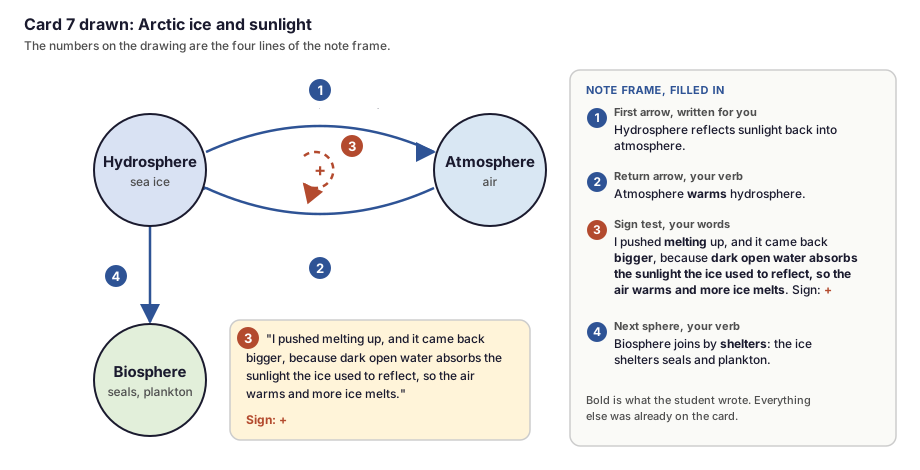
Arctic ice and sunlight
Global · Hydrosphere and Atmosphere
- First arrow
- Hydrosphere (sea ice) reflects sunlight back into atmosphere.
- Return arrow
- What does a warmer atmosphere send back to the ice?
- Sign
- Melt a little ice and ask what the dark open water does with the sunlight the ice used to reflect.
- Grow to
- Biosphere joins first: less ice changes where plankton and seals can live.
- Sources
-
- NSIDC, Science of Sea IceOrigin: The National Snow and Ice Data Center, a US university research center funded by NASA and NOAA, publishes this page to explain the science of sea ice, including albedo, to the public.
- Note frame
-
- First arrow, written for you: Hydrosphere reflects sunlight back into atmosphere.
- Return arrow, your verb: Atmosphere ______ hydrosphere.
- Sign test, your words: I pushed ______ up, and it came back bigger / smaller, because ______. Sign: + / −
- Next sphere, your verb: Biosphere joins by ______.
The Amazon's flying rivers
Global · Biosphere and Atmosphere
- First arrow
- Biosphere (the forest) breathes out water vapor into atmosphere.
- Return arrow
- What does the atmosphere send back down onto the forest?
- Sign
- Cut some forest and ask whether the rain that fed the rest of it still arrives.
- Grow to
- Hydrosphere joins first: the rain feeds the rivers the forest drinks from.
- Sources
-
- Note frame
-
- First arrow, written for you: Biosphere breathes out water vapor into atmosphere.
- Return arrow, your verb: Atmosphere ______ biosphere.
- Sign test, your words: I pushed ______ up, and it came back bigger / smaller, because ______. Sign: + / −
- Next sphere, your verb: Hydrosphere joins by ______.
Permafrost thaw
Global · Geosphere and Atmosphere
- First arrow
- Geosphere (thawing frozen soil) releases carbon dioxide and methane into atmosphere.
- Return arrow
- What does an atmosphere holding more greenhouse gas send back to the frozen ground?
- Sign
- Thaw a little more ground and ask whether the gas it releases makes the next thaw slower, or faster.
- Grow to
- Biosphere joins first: microbes in the thawed soil are what turn the old carbon into gas.
- Sources
-
- Note frame
-
- First arrow, written for you: Geosphere releases carbon dioxide and methane into atmosphere.
- Return arrow, your verb: Atmosphere ______ geosphere.
- Sign test, your words: I pushed ______ up, and it came back bigger / smaller, because ______. Sign: + / −
- Next sphere, your verb: Biosphere joins by ______.
Ocean acidification
Global · Atmosphere and Hydrosphere
- First arrow
- Atmosphere (carbon dioxide) dissolves into hydrosphere.
- Return arrow
- What does the sea send back to the air, and does holding more carbon change how much more it can keep taking?
- Sign
- Add more carbon dioxide to the air and ask whether a more acidic ocean absorbs the next tonne more easily, or less.
- Grow to
- Biosphere joins first: shell-building animals struggle to build in the more acidic water.
- Sources
-
- Note frame
-
- First arrow, written for you: Atmosphere dissolves into hydrosphere.
- Return arrow, your verb: Hydrosphere ______ atmosphere.
- Sign test, your words: I pushed ______ up, and it came back bigger / smaller, because ______. Sign: + / −
- Next sphere, your verb: Biosphere joins by ______.
Volcanoes and the slow carbon cycle
Global · Geosphere and Atmosphere
- First arrow
- Geosphere (volcanoes) outgasses carbon dioxide into atmosphere.
- Return arrow
- What does a warmer, wetter atmosphere send back onto the rock over thousands of years?
- Sign
- Warm the air and ask whether more rain and weathering pulls carbon dioxide out of the air faster, and what that does to the warmth.
- Grow to
- Hydrosphere joins first: rain carries the weathered carbon to the sea, where it is buried as limestone.
- Sources
-
- Note frame
-
- First arrow, written for you: Geosphere outgasses carbon dioxide into atmosphere.
- Return arrow, your verb: Atmosphere ______ geosphere.
- Sign test, your words: I pushed ______ up, and it came back bigger / smaller, because ______. Sign: + / −
- Next sphere, your verb: Hydrosphere joins by ______.
Water vapor, the loop that amplifies
Global · Hydrosphere and Atmosphere
- First arrow
- Hydrosphere evaporates into atmosphere.
- Return arrow
- What does the air send back to the sea, and what does the extra vapor in the air do to the heat the sea receives?
- Sign
- You signed this loop in Step 6 of the tutorial; the source tells you how much it multiplies the warming.
- Grow to
- Geosphere joins first: rain soaks into groundwater, exactly as in the tutorial.
- Sources
-
- Note frame
-
- First arrow, written for you: Hydrosphere evaporates into atmosphere.
- Return arrow, your verb: Atmosphere ______ hydrosphere.
- Sign test, your words: I pushed ______ up, and it came back bigger / smaller, because ______. Sign: + / −
- Next sphere, your verb: Geosphere joins by ______.