Block 6: Dossier Work Day 3 + Defense Rehearsal
A short video clip or screenshot: a public figure citing an AI-generated "study" that turns out not to exist (a hallucinated citation).
Task: What went wrong? Could the OPVL framework have caught this? What is one specific OPVL question that would have surfaced the problem?
Answer in your Field Notebook, dated.
I can rehearse a defense of my dossier and articulate the strongest objection a panelist might raise, with at least one move from the Defending Your Work taxonomy.
I can defend a claim under questioning, cite my evidence, and revise when someone shows me better reasoning.
"Engaging in Argument from Evidence"
Where this runs:
- U0 B6: Dossier Work Day 3 + Defense Rehearsal ← you are here
- U0 B7: Defenses + Unit Close
- U3 B10: Defense Rehearsal + Optional Final Iteration
- U3 B11: Final Defenses Day 1
- U3 B12: Final Defenses Day 2 + Unit Reflection
- U4 B11: Climate Brief Final Drafting + Panel Rehearsal
- U4 B12: Briefs Submitted + Policy Panel Q&A
Assessed:
Every defense (C strand): U0 Block 7 onward
On track looks like:
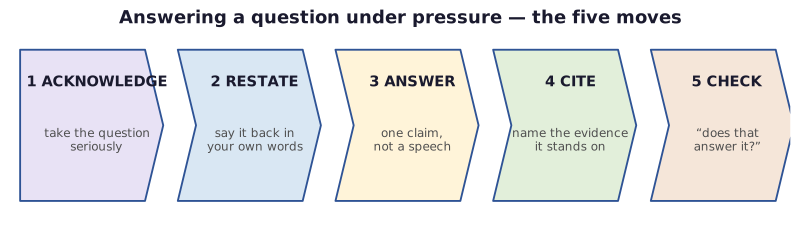
In Q&A you use the five moves, and 'I don't know, here's what would settle it' when true.
What today is about
Full work block. The Dossier is due at the start of next block, so this is the last class time you get on it. Paired defense rehearsal in the second half.
The first half is yours to work. Finish what is not finished in your Source Dossier, and fix the parts you already know are thin. The second half is rehearsal: paired peer-talk where each of you takes a turn defending your dossier while the other plays panelist. Twice. Then a 30-second whole-class share of your strongest pitch.
Rehearsal isn't optional. The first defense you give in Block 7 has to be at least your second defense, not your first. Make your mistakes today, with one partner, so you don't make them next class in front of the panel. Your partner today is doing you a favor.
Before you start the work
Start with the Watch: projected for everyone. The Read is the defending guide, and the Interact is used live during rehearsal in pairs.
Today's work: choose one path
Work time runs the first 35 minutes. Rehearsal runs the next 30, and the choice board below is how you rehearse it. Whole-class share is the last 15.
Most people spend a work block polishing the section they already like. The Limitations of your AI source and the cross-source synthesis are where the marks are, and they are the two people leave until last. Start there.
Open your Class Notebook and type today's entry header as Heading 2:
A: Aug 28 | U0 B6 | Dossier Work Day 3 + Defense RehearsalB: Aug 27 | U0 B6 | Dossier Work Day 3 + Defense Rehearsal
What you're submitting today
Two short things. The dossier itself is not due today; it is due at the start of next block.
The peer-feedback note (one paragraph from your partner, written on the observation guide) goes to Classroom by end of class. Underneath it, write one line: which section of your dossier is still unfinished going into next block. Name the section. "Nearly done" tells us nothing, and this line is how Ms. Jayanthi/Mr. Matt know who to find before the defenses.
Submit via Google Classroom (link posted in August)One question before you leave
Three to five minutes. Your answer is saved to your reflection journal, where you can read back everything you have written this year.
Use it to plan for Block 7.
Today's reflection is in Google Classroom, under Reflection Journal.
Link posted in AugustSign in with your school account. Your teacher can see what you write here.